There are really two separate questions here: when should wisdom teeth first be checked out, and how do you know if yours actually need to come out? Both matter, and the answer to the first one is a lot simpler than most people expect.
The Age We Recommend for a First Evaluation
We generally recommend a wisdom tooth evaluation in the mid-to-late teenage years, typically somewhere around 15 to 19, even if nothing hurts yet. At this age, the roots usually haven’t fully formed, which tends to make extraction easier and recovery faster if removal turns out to be the right call. Waiting until your 20s or 30s doesn’t mean removal becomes impossible, it’s just often a bit more involved once the roots are fully developed.
What Happens at an Evaluation
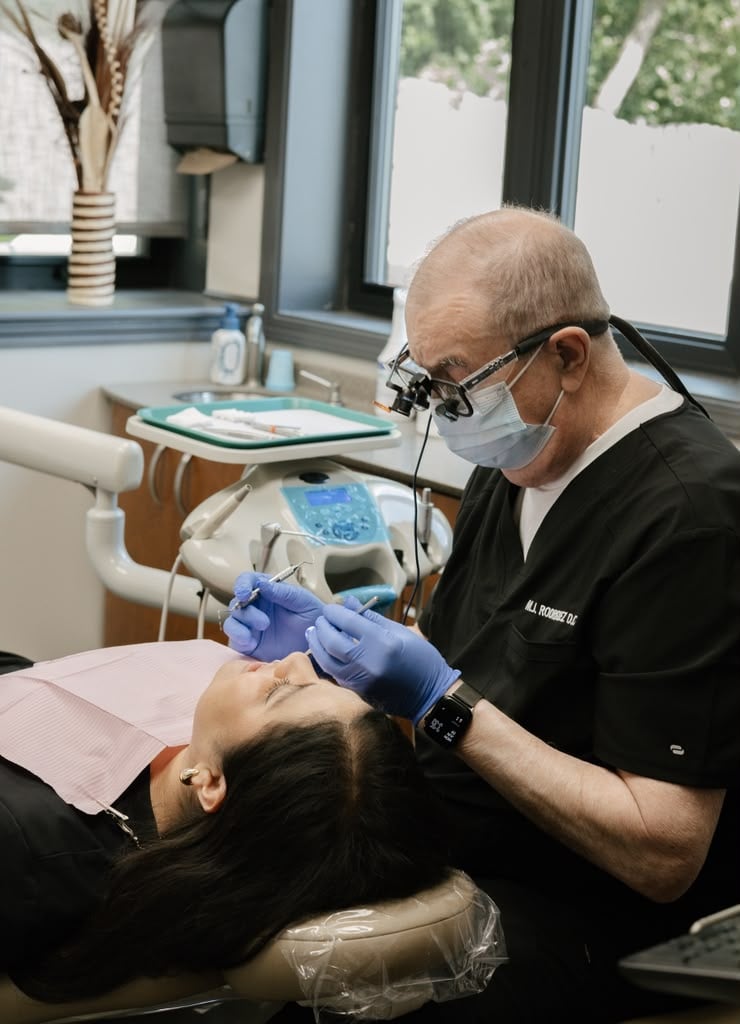
It’s a straightforward visit: an exam plus X-rays to see how your wisdom teeth are positioned, whether there’s enough room for them, and how close they sit to nerves or your other teeth. From there, we can tell you whether removal makes sense now, later, or not at all.
Signs Your Wisdom Teeth May Need to Come Out
Regardless of age, certain signs are worth getting checked out sooner rather than waiting for your next routine visit:
- Pain or tenderness in the back of your jaw
- Swelling or soreness in your gums near the back molars
- Difficulty opening your mouth fully
- A bad taste or odor that won’t go away, even with good hygiene
- Visible crowding or shifting in your other teeth
- A tooth that’s only partially visible through the gum
If any of these sound familiar, it’s worth having it looked at rather than waiting. Persistent pain, swelling, or signs of infection are covered in more depth on our pain, swelling, and pericoronitis page.
Whether you’re 16 or 36, schedule an evaluation and we’ll tell you exactly where things stand.