Children's Dentistry in Crystal Lake, IL
Baby teeth hold space for adult teeth, help children chew and speak, and set the tone for how they feel about the dentist. At Family Dentistry of Crystal Lake we see children for exams, cleanings, cavity care and the questions in between, like when to start and what to do after a fall at the playground.
Early Dental Care Makes a Big Difference for Kids
Raising your child includes taking care of their dental health. Even though kids eventually lose their baby teeth, dentistry for children is important to prevent cavities, gum disease, and other oral risk factors that can impact the formation of adult teeth. Early visits to the dentist also get kids into the routine of dental visits and establish good oral health care habits that last a lifetime.
When should my child first see a dentist?
The usual advice is a first visit by your child’s first birthday, or within six months of the first tooth. That visit is short and calm. We look at the teeth, check how the jaw and bite are developing, and answer your questions about brushing, pacifiers, thumb-sucking and fluoride. Many babies spend most of it in a parent’s lap. Younger children often need a longer appointment, so tell us your child’s age when you book. Read more about what to expect at your child’s first dental visit.
Dental care we offer for children
- Exams and cleanings to catch problems early
- Fluoride treatments to strengthen enamel
- Dental sealants on back teeth
- Cavity treatment for baby and adult teeth
- Tooth extractions when a tooth cannot be saved
- Space maintainers after an early tooth loss
- Mouthguards for sports
- Bite checks, early orthodontic assessment and advice on pacifier and thumb-sucking habits
- Care after a knocked or chipped tooth: see our emergency dentistry page
If your child is nervous
Plenty of children are nervous at the dentist, and that is normal. Tell us when you book, and we will plan the visit around your child. We explain what we are about to do before we do it, take breaks when they are needed and move at your child’s pace. You are welcome to stay in the room the whole time. For more ideas, read our tips for helping kids with dental anxiety.
Caring for baby teeth at home
For children under 3, brush twice a day with a smear of fluoride toothpaste, about the size of a grain of rice. From 3 to 6, use a pea-sized amount. Start flossing once two teeth touch. Water is the best drink between meals, and a bottle or sippy cup of juice or milk at bedtime is a common cause of cavities in young children.
What is Pediatric Dental Care?
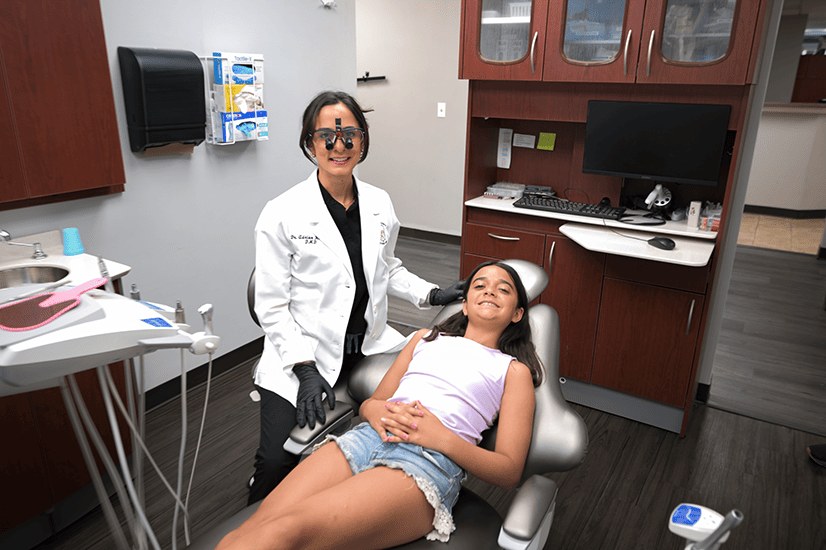
Pediatric dentistry specializes in providing dental treatment for children. Infants and young kids experience dental visits in entirely different ways than adults do, and they require unique distractions, gentle reassurance, and kid-sized dental tools for a successful result.
When Should Kids Start Seeing the Dentist?
Many parents wonder when their child should start visiting the dentist. The recommendation is that kids should have their first appointment by their first birthday, or within six months of getting their first tooth. Infant dentistry presents tricky challenges that pediatric specialists are uniquely qualified to address: babies cry at the first sign of aggravation, and they’re unresponsive to requests to open their mouths.
Pediatric Dentistry Services
Pediatric dental services we provide include:
- Oral exams
- Teeth cleanings
- Repair of tooth cavities or defects
- Treatment for injuries of the teeth, gums, and soft tissue of the mouth
- Risk assessment for dental caries, an infectious dental disease
- Bite assessments
- Habit counseling for pacifier use and thumb sucking
- Early assessment for orthodontics
- Preventive care such as fluoride treatments and dental sealants
- Diagnosis and management of other oral health issues
How Does a Pediatric Dental Appointment Work?
When you schedule an appointment, you’ll be asked your child’s age, as younger kids often require a longer appointment. Parents are encouraged to join children in the exam room, in order to facilitate effective communication regarding all aspects of their child’s pediatric dental care. The presence of a parent can also make a child feel more comfortable during the appointment. After a few uneventful trips to the dentist, your child will feel much more comfortable about the process.