Already read up on All-on-4 and wondering why some dentists recommend two more implants? All-on-6 runs on the same basic idea, a small number of implants supporting a full, fixed arch of replacement teeth, just with a bit more support built in. It’s not automatically the “better” choice for every patient, but it’s a valuable option when the situation calls for it.
Why Some Patients Are Recommended Six Implants Instead of Four
- More implants mean the biting force is spread across a larger area, which some patients and dentists prefer for long-term durability
- Additional implants can offer a bit of a safety margin, since the load is shared across more anchor points
- Certain bite patterns or a history of teeth grinding may make extra support worth considering
- Some patients simply have anatomy, and available bone, that lends itself well to a six-implant plan
One thing worth being upfront about: All-on-6 isn’t a workaround for significantly limited bone volume. In fact, it generally requires adequate bone to place the additional implants successfully. When bone volume is a real limiting factor, other options like bone grafting may be part of the conversation instead.
How We Decide Between Four and Six
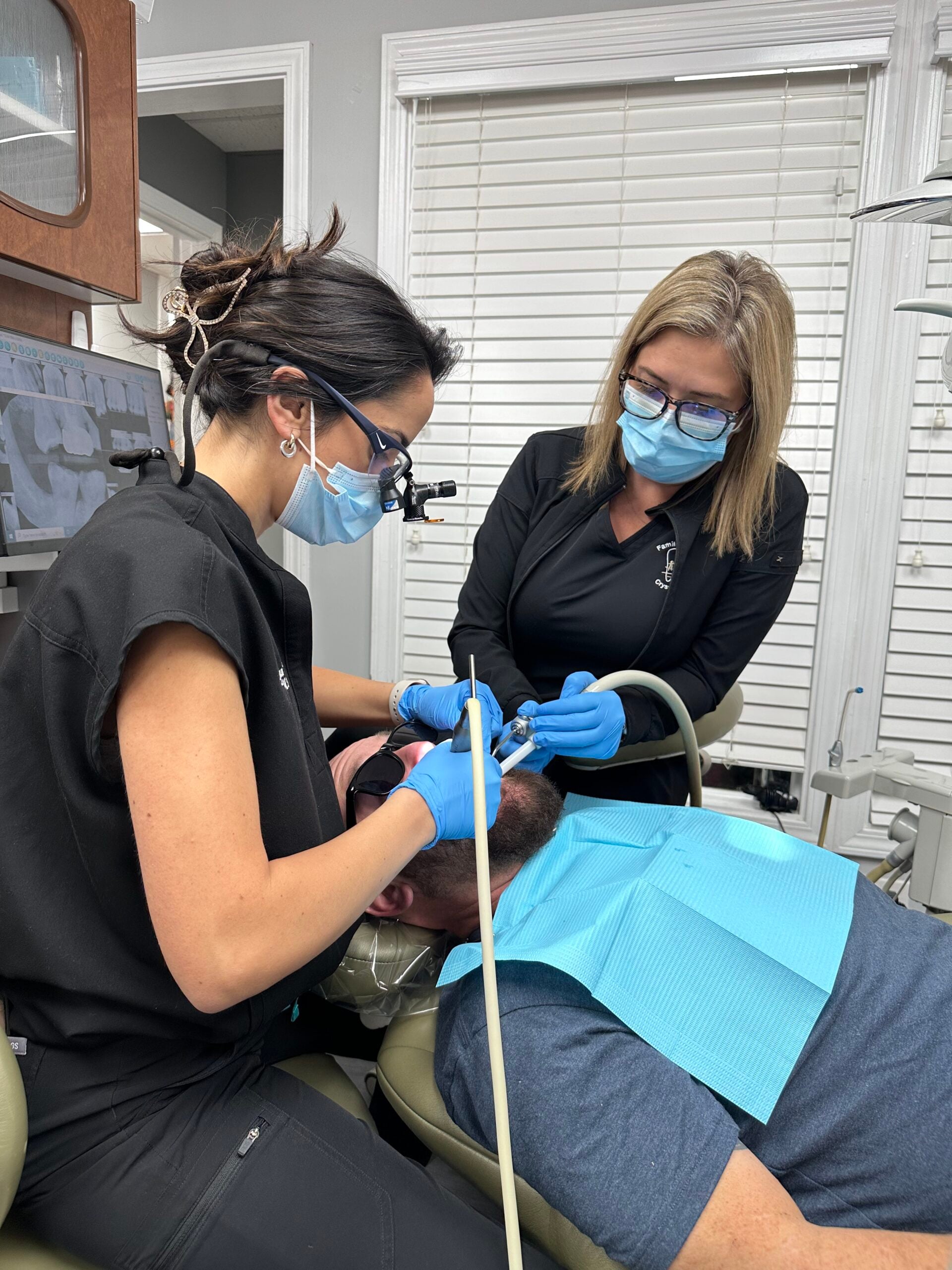
There isn’t a one-size-fits-all rule here, the research comparing long-term outcomes between four and six implants is mixed, and a lot comes down to your individual anatomy, bite, and goals. We’ll walk through your imaging together and explain our specific recommendation for your case, rather than defaulting to either option automatically. You can also read about the All-on-4 approach for comparison.
What to Expect
The overall experience is similar to All-on-4: a consultation and imaging, implant placement (often with a fixed temporary prosthesis the same day), a healing period while the implants integrate with the bone, and finally your custom long-term prosthesis. You can learn more about the general step-by-step process on our All-on-X page.
Not sure whether four or six implants makes more sense for you? Set up a consultation and we’ll help you figure it out.