When tooth pain becomes overwhelming, the closest emergency room can feel like the obvious place to go. Pain at that level is hard to think through, and you want relief fast. The question many people ask in that moment is simple: can emergency rooms remove teeth? Knowing what an ER can and cannot typically do helps you choose the right place for care quickly, so you spend less time in pain and more time on the treatment that actually fixes the problem.
How ERs May Manage Pain, Infection, or Serious Complications
Hospital emergency departments are built to stabilize medical emergencies. For a dental problem, that usually means managing symptoms and checking for complications. An ER provider may prescribe pain medication, start antibiotics if there are signs of infection, and evaluate swelling that could affect your breathing or swallowing. They can also treat facial injuries, control heavy bleeding, and order imaging when a more serious injury is suspected.
This kind of care can be valuable, especially when a dental problem has turned into a medical one. It is also meant to be a bridge. Most emergency rooms do not have a dentist on site or the specialized instruments used in dental procedures, so a visit often ends with medication and a recommendation to see a dentist as soon as possible.
Why Tooth Extraction Usually Requires Dental Care
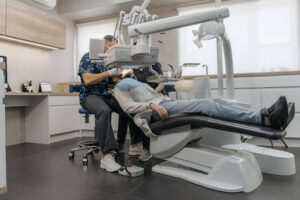
Removing a tooth safely takes more than pulling it. During a dental tooth extraction, the dentist studies X-rays to understand the shape and position of the roots, numbs the area precisely, and uses instruments designed to protect the surrounding bone, gums, and neighboring teeth. Afterward, you receive specific aftercare instructions so the site can heal without complications.
There is another reason to see a dentist. Pain medication and antibiotics can calm symptoms, but they do not remove the source of the problem, whether that is deep decay, a cracked tooth, or an abscess. A dentist can often save the tooth with treatment such as a root canal, and when removal is the right choice, they can talk with you about replacing the tooth afterward. An ER visit alone rarely gets you that far.
Signs That Require Immediate Medical Attention
Some symptoms mean the problem has moved beyond the tooth and needs urgent medical care, whether or not a dentist is available. Go to the nearest emergency room or call 911 if you notice any of the following:
- Swelling in your face, jaw, or neck that is spreading
- Difficulty breathing or swallowing
- Fever along with facial swelling
- Trouble opening your mouth fully
- Swelling that reaches toward your eye
- Bleeding that does not stop after applying steady pressure
- Facial or head trauma, especially with confusion or loss of consciousness
These signs can point to an infection spreading into deeper tissues or a more serious injury. Do not wait for a dental appointment if any of them appear.
What to Do While You Wait to Be Seen
If your symptoms do not involve any of the warning signs above, a few simple steps can ease discomfort until you reach a dentist. Rinse gently with warm salt water, apply a cold compress to the outside of your cheek, and take an over-the-counter pain reliever exactly as the label directs. Avoid chewing on the painful side, and do not place aspirin directly on the tooth or gums, since it can irritate the tissue.
When an Emergency Dentist Is the Better Option
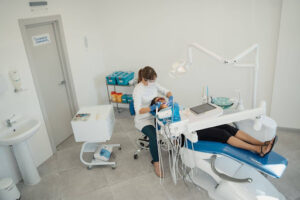
If you can breathe and swallow normally and your problem is centered on a tooth, an emergency dentist is usually the more direct path to relief. Severe toothaches, a knocked-out or broken tooth, a lost crown, or a suspected abscess are all situations a dental office is equipped to diagnose and treat. Taking care of the cause, rather than only the symptoms, is what keeps the pain from coming back.
Family Dentistry of Crystal Lake offers same-day emergency dental appointments for patients in Crystal Lake and nearby McHenry County communities. Our team can examine the tooth, take X-rays, relieve your pain, and walk you through whether the best next step is a filling, a root canal, or an extraction.
Contact Us for Emergency Dental Care in Crystal Lake
If you are dealing with an urgent dental problem, do not wait for it to get worse. Call Family Dentistry of Crystal Lake at (815) 444-6444 or visit our emergency dental care page to learn what to expect. If you ever face severe trauma or a life-threatening symptom, call 911 or go to the nearest emergency room first.
For general guidance on handling common dental emergencies, the American Dental Association’s MouthHealthy site is a helpful reference.