

An impacted wisdom tooth is simply one that doesn’t have enough room to come in the way it’s supposed to. Instead of erupting fully and lining up with the rest of your teeth, it gets stuck against your jawbone, gum tissue, or the tooth next to it. It’s an extremely common finding, most people’s jaws just aren’t quite big enough to fit a third set of molars comfortably.
Why Wisdom Teeth Become Impacted
Wisdom teeth are the last adult teeth to develop, and by the time they’re ready to come in, usually in the late teens or early twenties, there’s often no space left for them. Depending on the angle they’re growing at, they may come in sideways, lean into the tooth next to them, only partially break through the gum, or stay fully buried below the gumline.
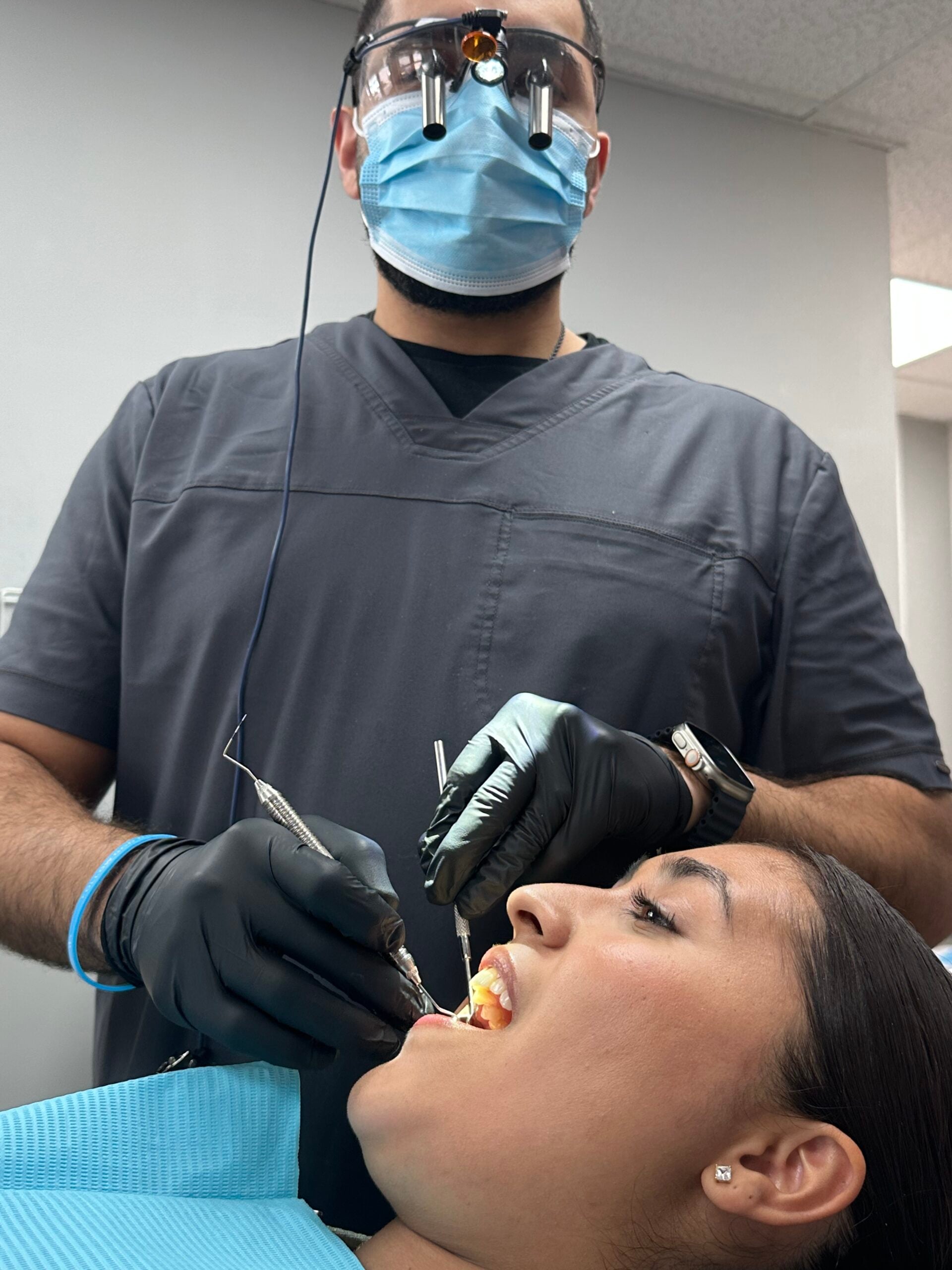
How We Find Out a Wisdom Tooth Is Impacted
Impaction is usually spotted well before it causes any pain, during a routine exam and a set of X-rays. Imaging lets us see the tooth’s position, how it’s angled, and how close it sits to nerves or the tooth beside it, which shapes what we recommend.
Why It’s Worth Addressing
An impacted tooth that’s left alone doesn’t usually resolve on its own, and it can lead to a handful of downstream problems over time:
- Pain and swelling as the tooth continues pushing against bone or the neighboring tooth
- Difficulty cleaning around a partially erupted tooth, which raises the risk of decay and gum infection
- Pericoronitis, an infection of the gum tissue around a partially erupted tooth
- Crowding or pressure against the second molar
- In less common cases, a cyst forming around the impacted tooth
What We Recommend
Not every impacted wisdom tooth needs to come out immediately, some can simply be monitored, especially if they’re not causing symptoms and are positioned in a way that’s unlikely to cause problems. Others are better addressed sooner rather than later. We’ll walk you through what we’re seeing on your X-rays and what makes sense for your situation. If removal is the right call, you can read more about what that visit actually looks like on our surgical wisdom tooth extraction page.
Think you might have an impacted wisdom tooth? Schedule an evaluation and we’ll take a look.