

Not every wisdom tooth comes out the same way. A tooth that’s fully erupted and easy to access can sometimes be removed with a simple extraction, similar to any other tooth. A surgical extraction is what’s needed when a tooth is impacted, hasn’t fully broken through the gum, or is positioned in a way that requires a small incision or gentle sectioning of the tooth to remove it safely. It sounds more intense than it usually feels, most patients are surprised by how manageable the visit actually is.
What Happens During the Appointment
Here’s the general flow of a surgical extraction visit, step by step:
- We numb the area and, if you’ve chosen one, get your sedation option started
- A small opening is made in the gum tissue if the tooth hasn’t fully erupted
- If needed, the tooth is gently divided into sections to allow it to be removed with less pressure on the surrounding bone
- The tooth (or its sections) is removed and the socket is cleaned
- Stitches are placed if needed, and a gauze pad helps a stable clot form
Throughout, our focus is on removing the tooth with as little disruption to the surrounding bone and gum tissue as possible, which is a big part of what makes recovery go smoothly afterward.
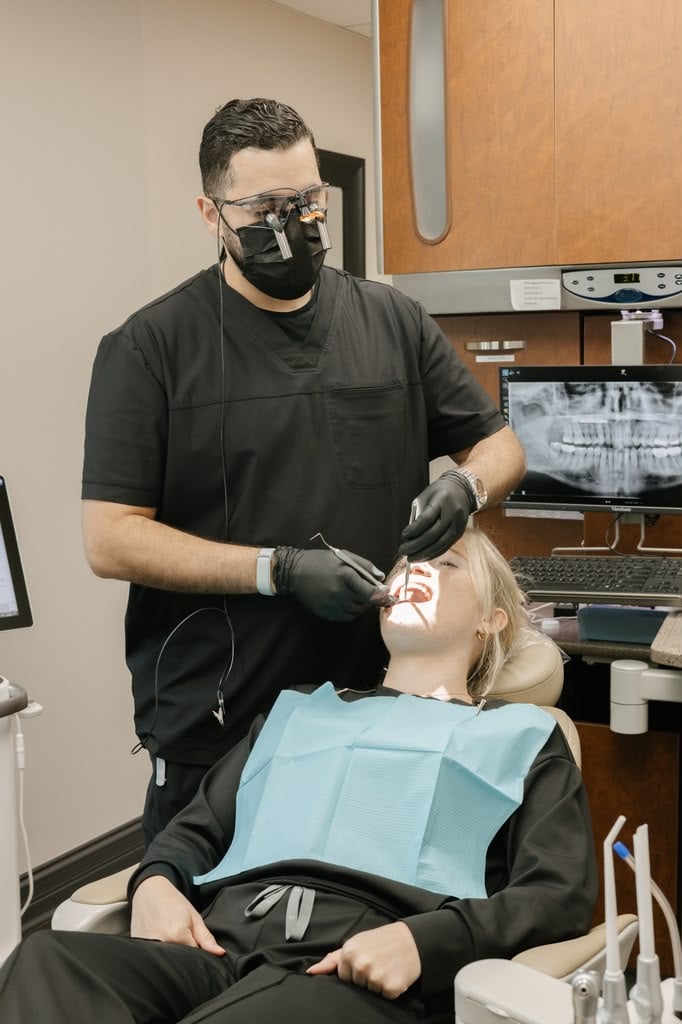
Local Anesthesia and Sedation Options
Every extraction starts with local anesthesia to fully numb the area, so you shouldn’t feel pain during the procedure itself, some pressure, yes, pain, no. Beyond that, we offer a few ways to help you feel more comfortable and relaxed:
- Local anesthesia only, for patients who are comfortable being awake and alert
- Nitrous oxide (“laughing gas”), which wears off quickly and lets you drive yourself home
- Oral conscious sedation, taken before your appointment, for patients who feel anxious about dental visits
For cases involving deeper impaction, multiple teeth, or a preference for being fully asleep, IV sedation or general anesthesia may be a better fit, which sometimes means coordinating care with an oral surgeon. You can read more about when that happens on our consultation and referral process page.
How Long the Procedure Takes
A single surgical extraction typically takes somewhere in the range of 20 to 40 minutes, though this varies based on the tooth’s position and how many teeth are being removed in the same visit. If you’re having multiple wisdom teeth removed at once, plan for a longer chair time overall, though it’s still usually completed in a single appointment.
Right After the Procedure
You’ll rest for a bit while any sedation starts to wear off, and we’ll go over your aftercare instructions before you head home with someone to drive you, if you had sedation. For a full breakdown of what the days that follow look like, see our recovery timeline and diet guide.
Have questions about what your extraction will involve? Schedule a consultation and we’ll walk you through it in detail.