Missing most of your teeth on both the top and bottom, rather than just one arch? That’s the situation full-mouth treatment is built for. The phrase simply means both arches are being treated together, rather than just the upper or just the lower.
How Full-Mouth Treatment Differs From Treating a Single Arch
If only your upper or only your lower arch needs replacement, that’s generally referred to as full-arch treatment, a single arch, rather than full-mouth. Full-mouth simply means doing both. The underlying implant techniques, All-on-4, All-on-6, are the same either way, we’re just applying them to both arches instead of one.
Can Both Arches Be Done at the Same Time?
Often, yes. Many patients have both arches treated in the same visit, which means one shared healing period and one overall timeline rather than two separate processes. In some cases, we may recommend staging the two arches instead, for example if there are different considerations for the upper versus lower jaw. We’ll walk through what makes sense for you at your consultation.
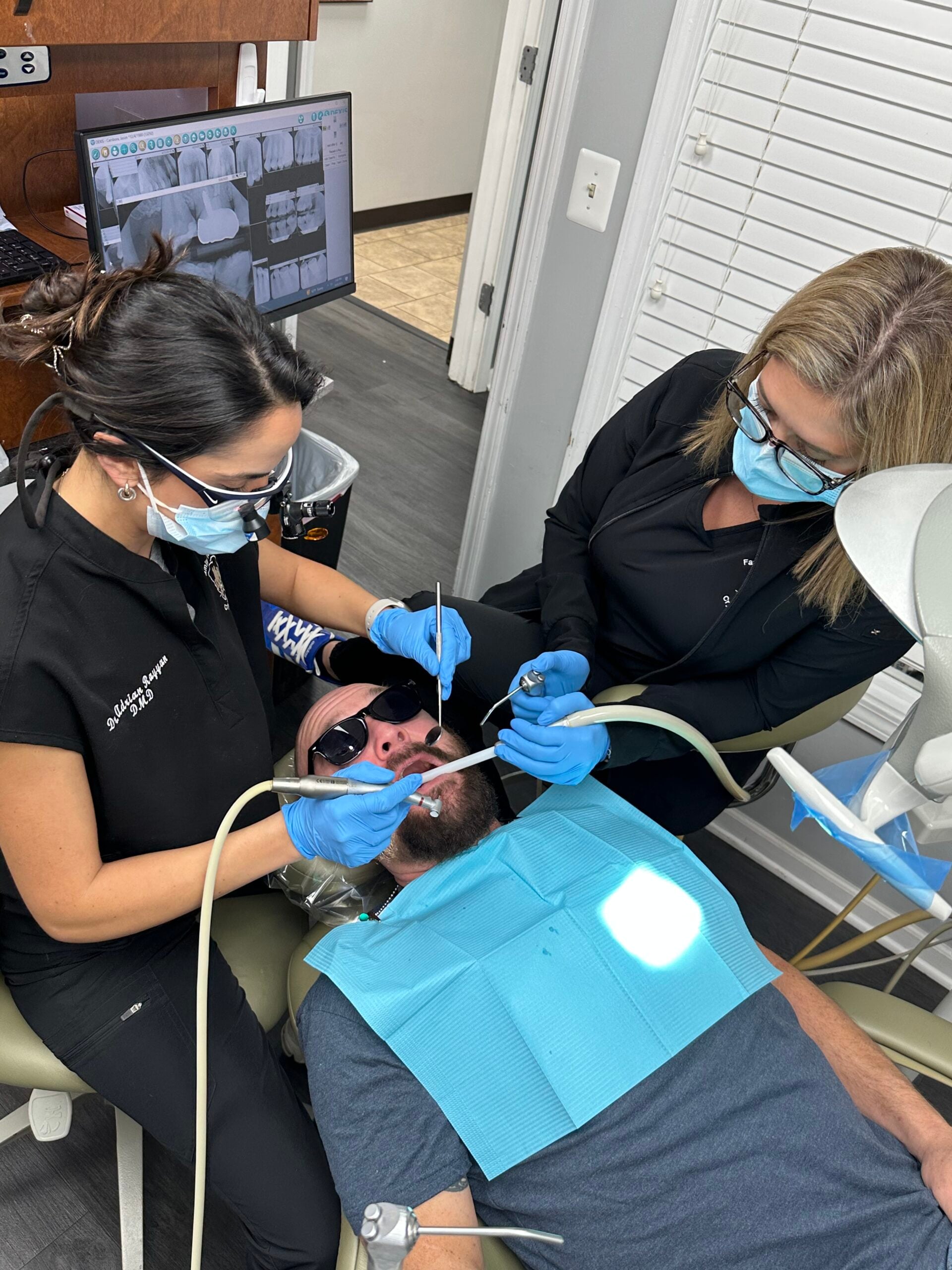
What to Expect
- A consultation and imaging to evaluate both arches
- Implant placement in one or both arches, often with a fixed temporary prosthesis the same day
- A healing period while the implants integrate with the bone
- Your final, custom prosthesis for each arch once healing is complete
Every full-mouth case is a little different depending on how much bone is available in each arch and your specific goals. For a deeper look at how the implants themselves work, see our All-on-4 and All-on-6 pages.
Ready to talk through full-mouth treatment? Get in touch and we’ll map out your options.