
Living with dentures for years can be frustrating. Many patients experience discomfort, slipping, difficulty eating, or loss of confidence. If you’ve worn dentures long-term, you may be wondering whether full mouth dental implants are still an option. The encouraging answer is yes, and for many patients, implants offer a life-changing, permanent solution.
At Family Dentistry of Crystal Lake, we help denture patients explore advanced implant options designed to restore comfort, stability, and confidence.
Am I Eligible for Full Mouth Dental Implants After Dentures?

Eligibility for full mouth dental implants depends on several factors, not just how long you’ve worn dentures. The most important considerations include:
Bone levels in the jaw
Overall oral health
Medical history (diabetes, smoking, osteoporosis, etc.)
Gum condition and infection risk
Long-term denture use can lead to bone loss because dentures don’t stimulate the jawbone the way natural teeth or implants do. However, many patients still qualify for implants thanks to modern techniques like bone grafting or specialized implant placement.
A comprehensive evaluation with digital imaging is the best way to determine candidacy.
Traditional Full Mouth Implants vs Same-Day Implants
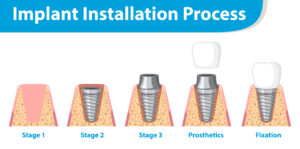
When replacing a full arch of teeth, patients typically choose between traditional implants and same-day (immediate-load) implants.
Traditional Full Mouth Implants
Implants are placed first
Healing and bone integration take 3–6 months
Final teeth are placed after healing
Ideal for patients who prefer a staged, conservative approach
Same-Day Implants
Implants and a temporary fixed prosthesis are placed the same day
Faster transformation and immediate function
Requires sufficient bone density and stability
Not suitable for every patient
Your dentist will recommend the safest option based on your anatomy, health, and goals.
For additional education on full-arch implant solutions, visit the American Academy of Implant Dentistry
Benefits of Full Mouth Dental Implants

Full mouth dental implants offer significant advantages over traditional dentures, especially for long-term denture wearers.
Key benefits include:
Permanent, non-removable teeth
Improved chewing and speech
No slipping or adhesive use
Better jawbone preservation
More natural look and feel
Increased confidence and comfort
Many patients say implants feel like getting their natural teeth back, without the daily frustrations of dentures.
What the Full Mouth Implant Process Looks Like
The process begins with a detailed consultation, followed by personalized treatment planning. Depending on your case, the timeline may range from a few months to longer if additional procedures are needed.
Steps typically include:
Implant evaluation and imaging
Treatment planning and coordination
Implant placement
Healing and integration
Final fixed prosthesis placement
Throughout the process, your dental team monitors healing closely to ensure long-term success.
Advanced Implant Care in Crystal Lake

Choosing the right provider matters, especially for advanced implant treatment. At Family Dentistry of Crystal Lake, we take a patient-first approach, combining experience, advanced technology, and personalized care to help denture patients transition confidently to implant-supported teeth.
Schedule your implant evaluation today
Learn more about our implant and restorative services here